×
Executive Summary & EEAT Disclosure
This technical whitepaper is authored by the Senior Engineering & R&D Group at Zhejiang Huahe Forklift Co., Ltd. Drawing upon 15+ years of dedicated manufacturing and global export experience across Europe, North America, Central Asia, and Southeast Asia, this analysis synthesizes empirical test data, feedback from over 1,000 international fleet operators at CeMAT ASIA 2026, and standards from the CCMA Industrial Vehicles Branch and ISO 3691-1.
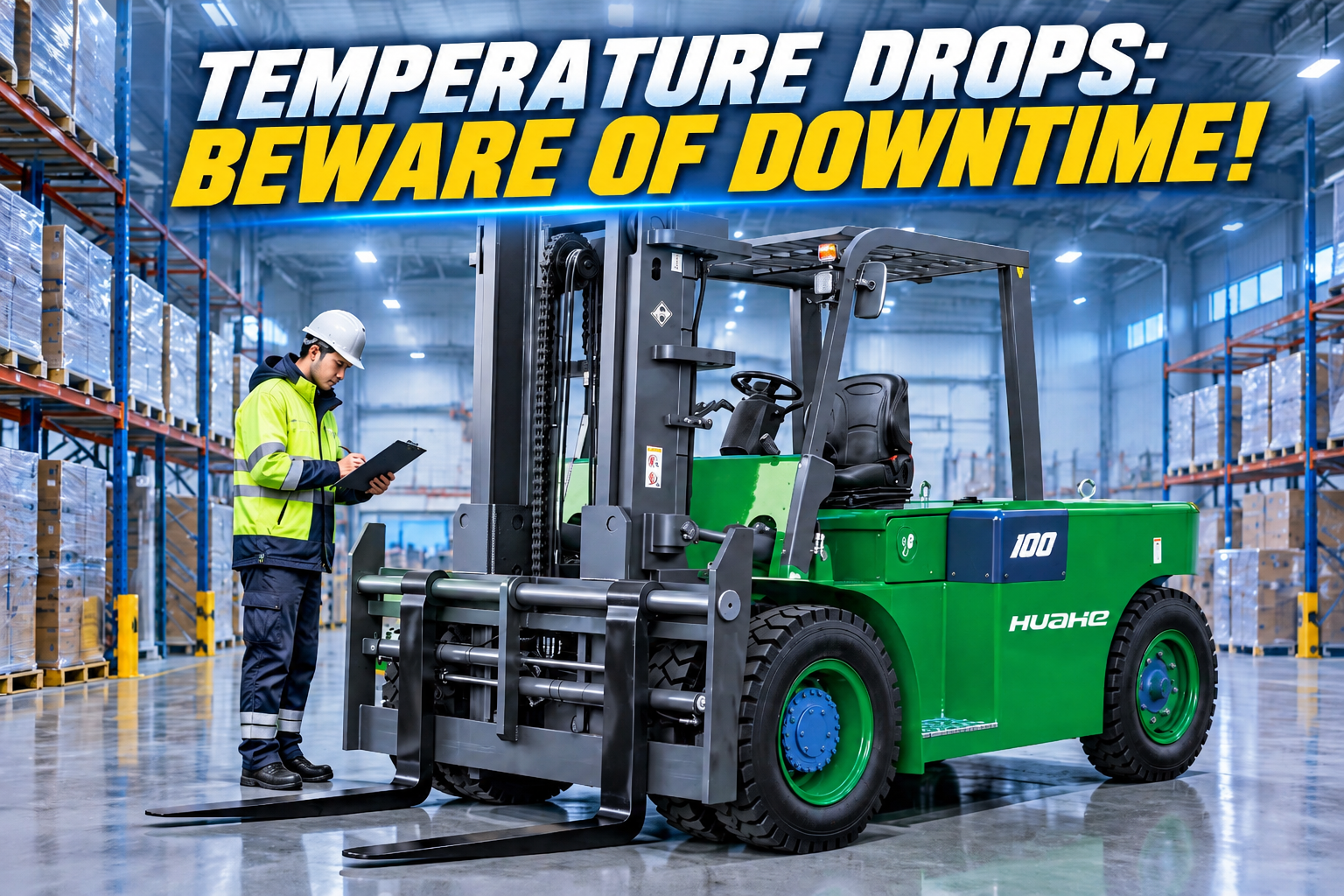
As sub-zero winter temperatures arrive across the Northern Hemisphere, logistics facilities face an acute operational conflict: Q4 delivery volume surges converge with cold-induced equipment failures. A single stranded forklift during peak container unloading or high-bay staging creates cascading bottlenecks, generating thousands of dollars per hour in lost warehouse throughput.
This guide provides an engineering-level breakdown of the thermodynamic and electrical failure modes common in winter material handling, demonstrating how modern heavy-duty lithium-ion forklifts (from 2.5T up to 10T) resolve these vulnerabilities while significantly lowering Total Cost of Ownership (TCO).
1. The Physics of Cold Downtime: Why Legacy Fleets Falter in Winter
Industrial forklifts operate in some of the harshest ambient conditions. When ambient temperatures drop below 0°C (32°F) and approach -15°C to -25°C in outdoor yards or cold storage facilities, conventional machinery experiences predictable physical degradation across three core subsystems:
|
Subsystem |
Physical Phenomenon |
Direct Operational Symptom |
|
Lead-Acid Battery |
Increased electrolyte viscosity & reduced ion diffusion rate |
30%–40% capacity drop; sudden voltage collapse under acceleration |
|
Low-Grade Lithium Packs |
Anode polarization during cold high-current charging (<0°C) |
Irreversible lithium plating; permanent capacity degradation |
|
Hydraulic Circuit |
Kinetic oil viscosity surge (ISO VG 46/68 oil freezing) |
Mast sluggishness; pump cavitation; 25% motor current draw spike |
|
Electrical Controls |
Extreme thermal cycling between outdoor cold and heated warehouse |
Condensation shorts; erratic CAN-bus sensor fault codes |
|
Mast & Mechanical Steel |
Cold embrittlement & standard lithium grease solidification |
Roller binding; mast chattering; uneven leaf chain elongation |
The 'Lithium Plating' Hazard Explained
A widespread misconception is that all lithium forklifts behave identically in winter. When conventional lithium cells without integrated thermal management are charged at high currents in sub-zero temperatures, lithium ions cannot intercalate into the graphite anode quickly enough. Instead, metallic lithium deposits directly onto the anode surface (lithium plating). This not only destroys cell capacity permanently but can also form dendritic crystals that pierce the separator, risking internal short circuits.
2. Engineering Solutions: How Huahe Heavy-Duty Lithium Forklifts Conquer Cold Climates
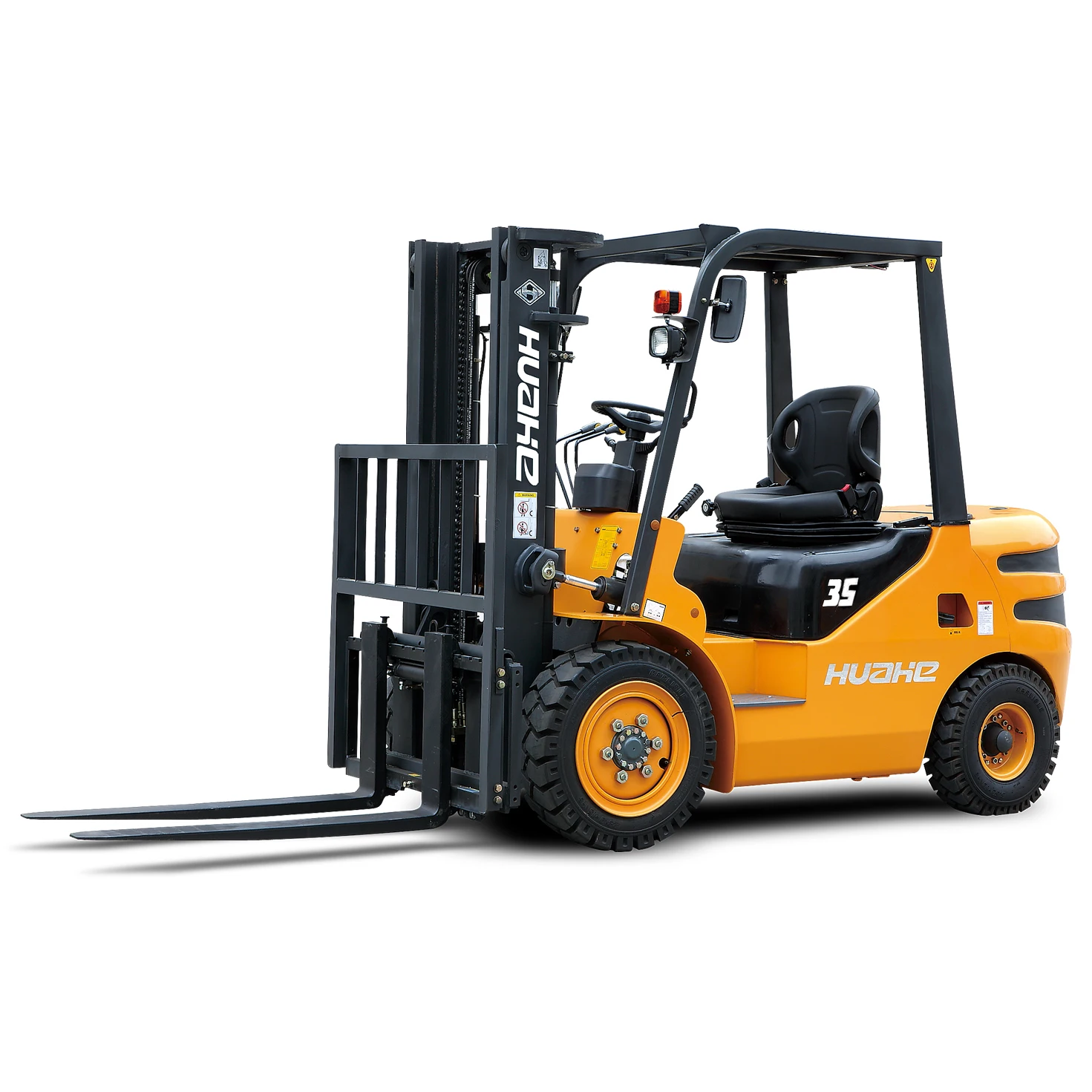
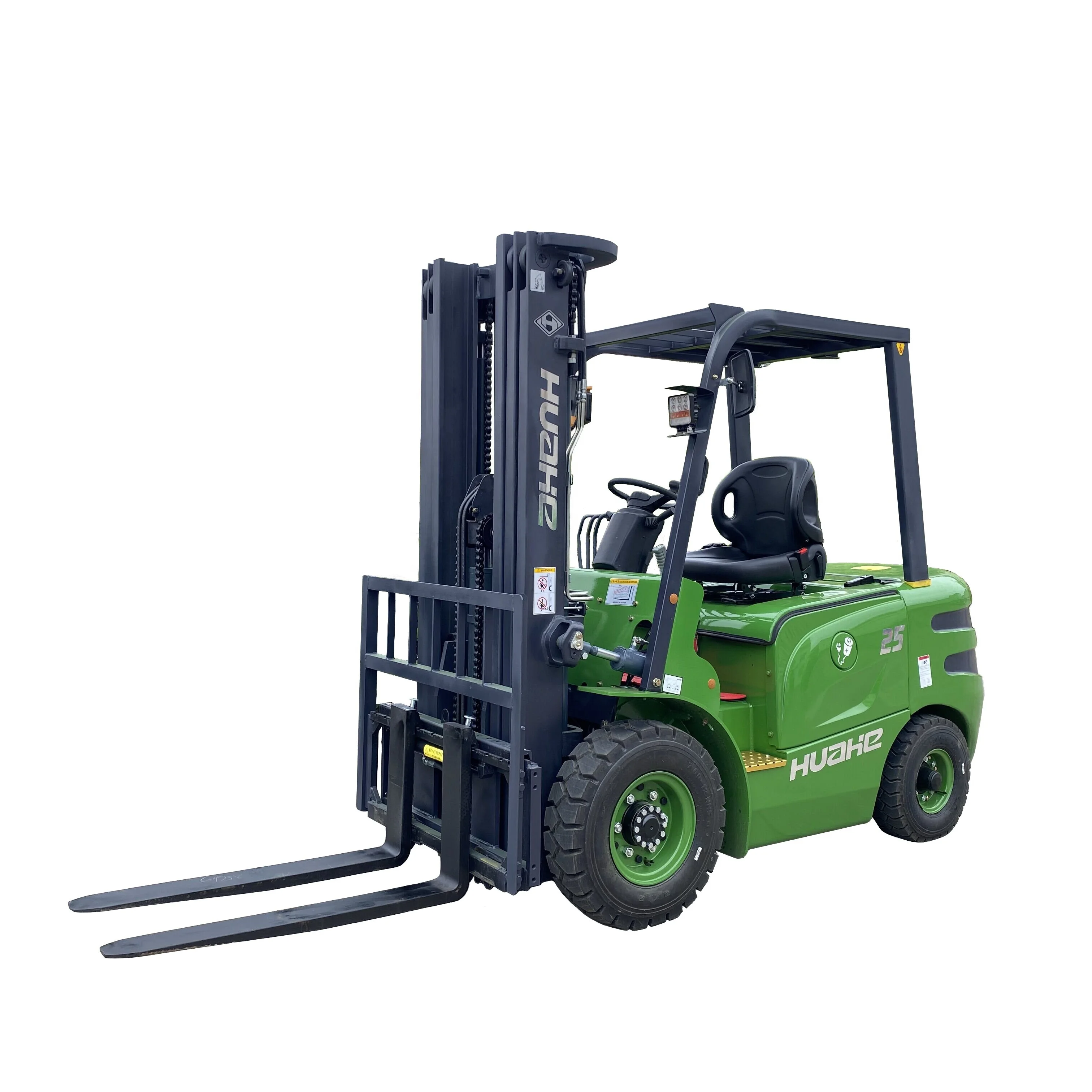
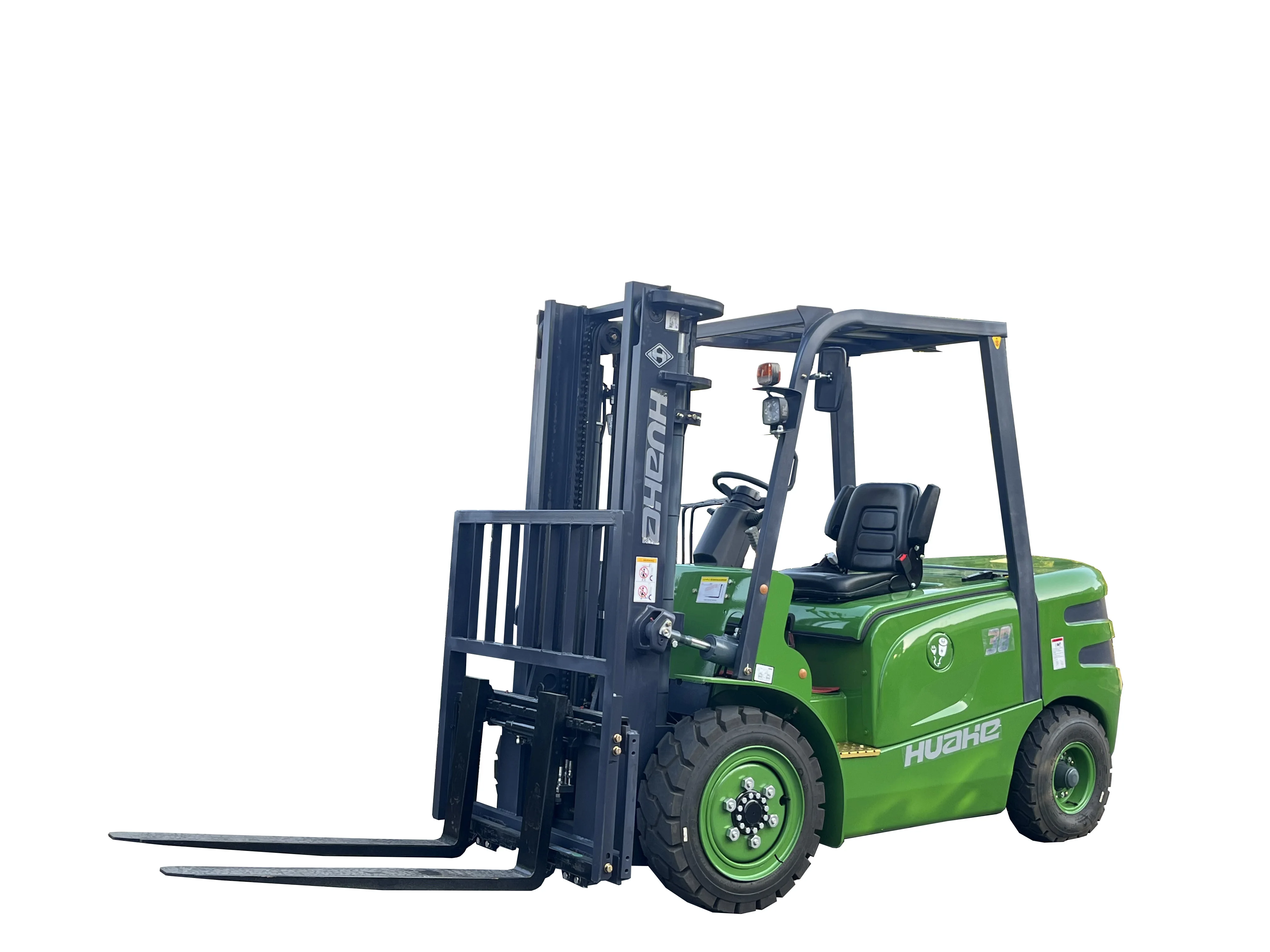
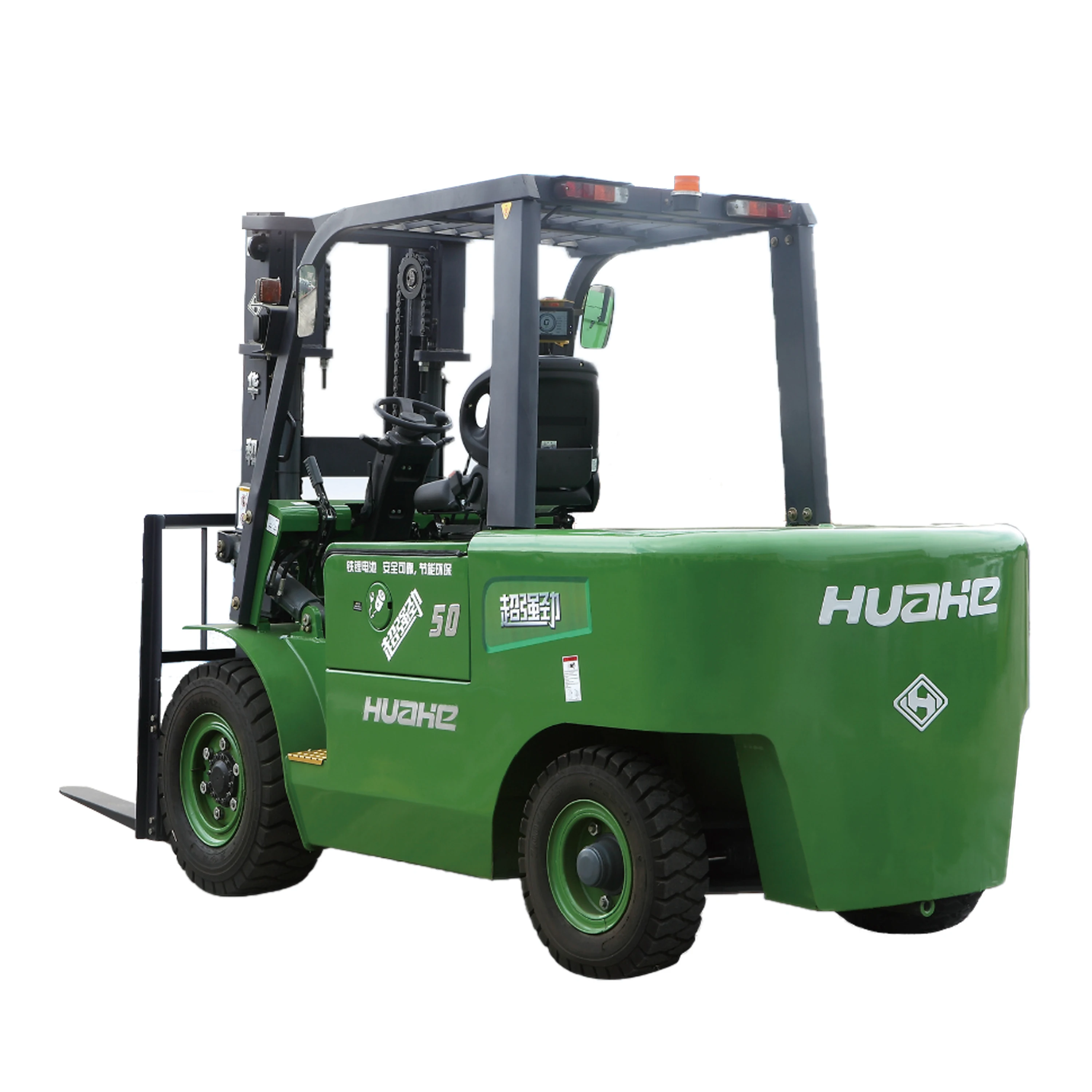
To guarantee uninterrupted 24/7 productivity during winter peak seasons, Zhejiang Huahe Forklift has engineered a multi-layered cold-resilience architecture across our counterbalanced electric fleet:
• Intelligent BMS with Integrated PTC Thermal Pre-Conditioning: When connected to the charger in freezing conditions, the BMS automatically engages internal PTC heating elements prior to delivering high-current charge, elevating cell temperatures above +5°C to completely prevent lithium plating.
• Dual AC Drive & Optimized Low-Temperature Hydraulics: Unlike internal combustion engines that require extended warm-up periods, Huahe's dual permanent magnet AC drive motors deliver full peak torque from 0 RPM across icy ramps and frozen surfaces. High-viscosity-index (HV) fluids maintain rapid mast lifting speeds even at -20°C.
• IP67 Ingress Sealing & Anti-Condensation Electronics: Huahe encapsulates its self-developed AC controllers, high-voltage harnesses, and CAN-bus junctions in IP65/IP67-rated housings, neutralizing the risk of moisture-induced short circuits when transitioning between sub-zero yards and heated facilities.
3. Quantitative Head-to-Head: Winter Operational Comparison
|
Feature / Parameter |
Stage-V Diesel (5T) |
Lead-Acid Electric (5T) |
Huahe LiFePO4 Forklift (5T) |
|
Cold Usable Capacity (-10°C) |
Dependent on fuel gel |
60% – 65% rated capacity |
90% – 95% (with active pre-heating) |
|
Opportunity Fast Charging |
N/A (Fuel pump only) |
Impossible (8h charge + 8h cool) |
Full charge in 1.5–2h (Opportunity ready) |
|
Pre-Shift Warm-Up Required |
10 – 15 minutes idle |
3 – 5 minutes (reduced torque) |
Instant start (Full torque at 0 RPM) |
|
Winter Daily Energy Cost |
High (Cold idle consumption) |
Medium (Heat loss >25%) |
Low (>60% reduction vs diesel) |
|
Dedicated Battery Room |
None (Fuel storage) |
Mandatory (Ventilated acid bay) |
None (Decentralized plug-and-play) |
|
Cold Ingress & Sealing |
Standard mechanical bay |
Exposed terminals, acid mist |
IP65/IP67 sealed powertrain & pack |
4. The 5-Year Winter TCO Analysis: Unmasking the 'Cheap Purchase' Illusion
Procurement directors frequently scrutinize initial machinery purchase price (CAPEX). However, in high-throughput material handling, CAPEX accounts for only 20% to 25% of a forklift’s total 5-year operating expenditure. The remaining 75%+ is driven by energy consumption, scheduled fluid/filter servicing, battery replacements, and unplanned downtime.
|
Cost Component |
5-Ton Diesel (Stage V) |
5-Ton Huahe LiFePO4 Forklift |
|
Initial Machine Purchase |
$38,000 – $44,000 |
$48,000 – $56,000 |
|
Energy / Fuel (5 Years / 15,000 hrs) |
$78,000 (Diesel @ $1.15/L) |
$24,500 (Electricity @ $0.12/kWh) |
|
Routine Winter Maintenance |
$16,500 (Filters, oils, DPF, coolant) |
$3,200 (Hydraulic fluid & mast lube) |
|
Battery Maintenance / Swaps |
$2,400 (Starter batteries) |
$0 (Over 4,000 cycles to 80% SOH) |
|
Unplanned Winter Downtime Est. |
$12,000 (Gelled fuel/glow/downtime) |
$1,500 (Negligible cold delay) |
|
TOTAL 5-YEAR TCO |
$146,900 – $152,900 |
$77,200 – $85,200 |
|
NET 5-YEAR FLEET SAVINGS |
BASELINE |
SAVINGS: $61,700 – $75,700 (42% LOWER!) |
5. Operator Best Practices: The 3-Minute Winter Pre-Shift SOP
Preventive inspection takes three minutes per shift and stops 85% of cold-weather breakdowns before they occur:
1. LOOK (Static Inspection): Inspect the floor beneath chassis for hydraulic leaks; check fluid sight glass for milky condensation; ensure lift mast leaf chains are lubricated with clean low-temperature extreme-pressure grease.
2. LISTEN (Idling & Pre-Heating): Verify BMS battery heating cycle completes before heavy travel; listen for high-pitched pump whine indicating cold oil cavitation; allow 2 minutes low-idle oil circulation.
3. TEST (Dynamic Verification): Perform an unladen full-stroke mast lift/lower to check for binding; test service brakes on a clean, dry surface to confirm immediate response.
Partner with Zhejiang Huahe Forklift Co., Ltd.
As global supply chains navigate stringent ESG compliance, CBAM carbon border mechanisms, and tightening labor markets, industrial facilities can no longer afford equipment downtime disguised as 'routine winter wear.'
Transitioning to high-performance heavy-duty lithium forklifts is a decisive operational hedge that stabilizes throughput, shields operating margins from volatile fuel prices, and delivers verifiable long-term TCO reductions and operational predictability.
📩 GLOBAL INQUIRY & B2B PROCUREMENT
• Explore Our Range: Electric counterbalanced forklifts from 1.5T to 10T, powered by automotive-grade LiFePO4 battery platforms.
• Request a Fleet Consultation: Contact our applications engineering group to evaluate your facility’s cold-spec configurations and multi-shift handling requirements.
• Direct Contact: Email [email protected] or visit https://www.huaheforklift.com for technical specifications, container loading plans, and factory-direct proposals.
 Hot News
2026-04-20
2026-04-15
2026-02-02
2026-01-28
2026-01-16
2026-11-20
Copyright © 2026 by ZHEJIANG HUAHE FORKLIFT CO.,LTD — Privacy Policy

 EN