
 EN
EN



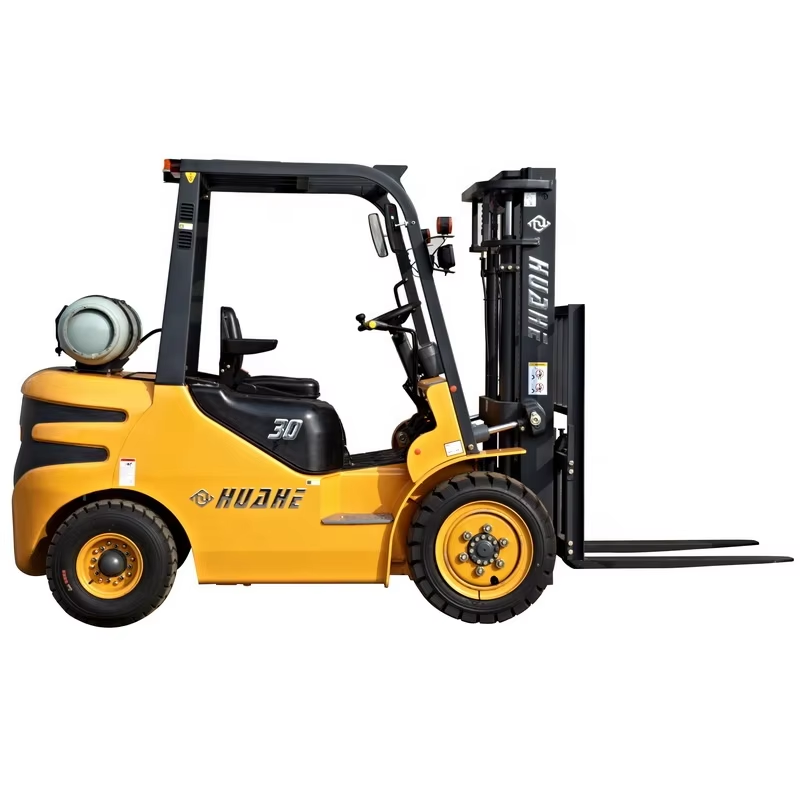
Assessing Operational Requirements for Material Handling
The process of selecting a counterbalance forklift begins long before reviewing technical specifications or price sheets. It starts with an honest, data-driven assessment of the specific environment where the machine will live and work. Whether moving heavy steel coils in an industrial yard or navigating aisles in a distribution center, the operating environment dictates the essential requirements. Huahe has observed that many enterprises make the mistake of prioritizing initial purchase price over operational fit, leading to long-term inefficiency. A counterbalance forklift operates on a fulcrum principle, meaning the weight of the machine itself is crucial for stability. Choosing the correct model requires evaluating factors like floor surface conditions, required lift heights, and the nature of the cargo. A clear understanding of these operational parameters is the first step toward selecting a machine that will enhance productivity rather than becoming a bottleneck in the material flow process.
Engine Power and Fuel Source Considerations
Selecting the right power source is a critical decision that influences both immediate performance and long-term operating costs. Internal combustion engines—whether powered by diesel, gasoline, or LPG—are traditionally favored for heavy-duty outdoor work where rapid refueling and high torque are essential. Conversely, electric counterbalance forklifts have become the industry standard for indoor operations due to their zero-emission performance, quieter operation, and lower overall maintenance requirements. Huahe emphasizes that when comparing these options, businesses must look beyond the fuel cost. One must consider infrastructure availability—such as dedicated charging stations for electric units or bulk fuel storage for internal combustion engines. Evaluating the expected duty cycle is key; a machine that runs multiple shifts per day requires a power solution that maintains consistency, ensuring that the forklift does not experience significant performance drops as the battery level or fuel supply decreases during the working shift.
Understanding Load Capacity and Center of Gravity
The most technical aspect of selecting a counterbalance forklift is mastering the relationship between load capacity and the load center. A forklift is rated to lift a certain weight, but that rating is intrinsically linked to how far the center of gravity of the load is from the mast. As a load becomes larger or more awkwardly shaped, the effective capacity of the forklift decreases. Ignoring this relationship is a common cause of workplace accidents and equipment failure. Huahe advises managers to always select a forklift with a slightly higher nominal capacity than what the heaviest typical load requires, providing a buffer that enhances safety and reduces strain on the hydraulic components. This level of technical oversight is essential for professional material handling, ensuring that the equipment operates within its safe design parameters while effectively managing the daily throughput of a busy warehouse or construction site.
Ergonomics and Operator Productivity
The operator is the most important element in the material handling loop, and the design of the forklift cab directly impacts output. When selecting a unit, it is vital to evaluate the ergonomic design, visibility, and control sensitivity. A counterbalance forklift that features intuitive joystick controls, a vibration-dampened seat, and an unobstructed view of the forks will naturally result in higher operator confidence and efficiency. Huahe recognizes that in a fast-paced logistics environment, operator fatigue is a hidden cost that leads to mistakes and increased maintenance needs. Investing in a machine that prioritizes the operator's comfort is a direct investment in the speed and accuracy of the supply chain. High-quality machinery should be viewed as a tool to empower the workforce, and selecting a unit with superior ergonomics is a proven way to improve morale and maintain peak performance during long, demanding shifts.
The Huahe Commitment to Quality and Support
Selecting a counterbalance forklift is not just about choosing a machine; it is about choosing a manufacturing partner that stands behind the equipment throughout its entire lifecycle. Huahe stands at the forefront of this industrial sector, offering robust, precision-engineered forklifts designed to thrive in the most demanding conditions. Beyond the hardware, Huahe provides a comprehensive suite of supply chain solutions, ensuring that every business receives the support, parts, and technical expertise required to keep operations running without interruption. With a relentless commitment to manufacturing integrity and a deep understanding of global logistics needs, Huahe empowers enterprises to build a fleet that is powerful, reliable, and perfectly aligned with their long-term growth objectives. Choosing equipment from a manufacturer that values durability and engineering excellence ensures that the investment contributes positively to operational success for years to come.