
 EN



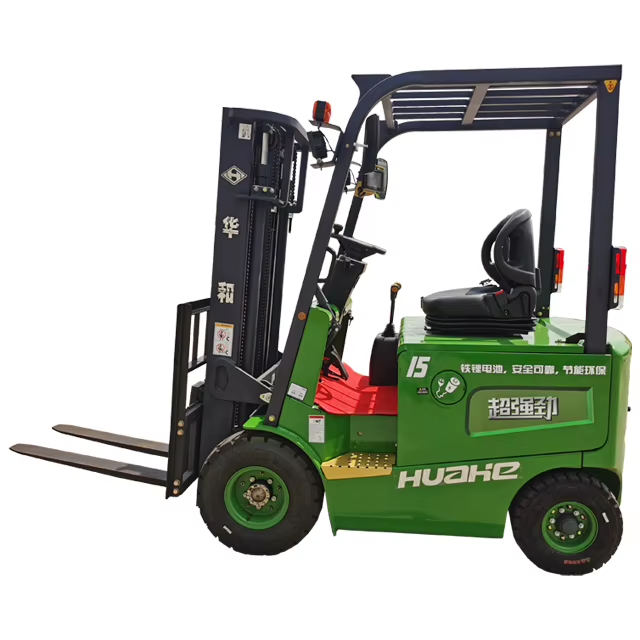
The Spatial Challenge of Modern Warehousing and Narrow Aisle Operations
When industrial facility managers and regional warehouse directors sit down to map out floor layouts for growing distribution centers, a familiar spatial bottleneck almost always emerges across global markets. Traditional counterbalance trucks require wide turning spaces, which forces companies to sacrifice precious cubic storage footage just to let heavy machinery maneuver safely between rows of inventory. In fast-paced commercial sectors where real estate costs soar higher every year, wasting valuable square footage on oversized pathways represents an unsustainable drain on capital. This exact operational challenge is why specialized narrow aisle forklift machinery has become an indispensable asset for modern supply chains. Transitioning facilities toward high-density storage configurations allows warehouse operators to expand pallet holding capacity dramatically without expanding physical building boundaries. Mastering the deployment of these agile trucks helps growing enterprises optimize workflow velocity, reduce overhead storage costs, and elevate overall financial performance across every single shift of the working week. Furthermore, as e-commerce fulfillment operations handle increasingly complex product catalogs, the ability to navigate tight spatial constraints becomes a critical competitive differentiator in today's demanding industrial ecosystem. Beyond immediate footprint savings, thoughtful spatial planning creates a smoother workflow that minimizes transit times between receiving docks and high-bay storage racks, thereby enhancing overall operational resilience across multi-shift facilities and distribution networks worldwide. Maintaining competitive advantage in modern logistics demands continuous evaluation of spatial efficiency and equipment deployment strategies to support long-term business objectives.
Mastering High-Precision Maneuvering in Confined Storage Zones
Operating industrial equipment inside restricted warehouse corridors demands an advanced understanding of specialized engineering and precise operator technique. Unlike standard counterbalance units, a modern narrow aisle forklift truck incorporates sophisticated design features such as articulating chassis frames, pantograph reach mechanisms, or specialized turret heads that rotate smoothly without requiring the entire truck body to turn sideways. During facility audits across busy regional distribution hubs, observing skilled drivers guide tall masts through narrow storage lanes highlights the vital importance of ergonomic controls, responsive power steering calibration, and crystal-clear forward visibility. These technical capabilities allow operators to position heavy pallets accurately into high-bay racking systems with millimetric precision. Comprehensive operator training focusing on mast sway management, proportional hydraulic control, and smooth directional transitions is essential to prevent costly rack impacts and protect valuable inventory. Additionally, advanced safety sensors, automated height selection features, and laser-guided alignment systems assist drivers in maintaining structural stability when handling loads at elevated heights during demanding shifts. Comprehensive training regimens also build operator confidence, directly reducing equipment wear and tear over extended operating cycles while maximizing overall productivity and safety standards.
Optimizing Storage Density and Maximizing Facility Return on Investment
Beyond physical handling precision, the strategic deployment of specialized narrow aisle equipment delivers profound economic advantages for growing commercial enterprises. Industry research consistently indicates that narrowing standard storage lane widths down to compact configurations can expand a facility's usable pallet capacity by a substantial margin. When calculating the total cost of ownership and lifecycle return on investment, investing in purpose-built narrow aisle forklift units completely eliminates the staggering capital expense of constructing new building expansions or leasing expensive off-site storage warehouses. Maximizing both vertical height and horizontal floor space ensures that existing warehouse infrastructure works significantly harder, generating higher throughput per square meter and reducing the overall cost per picked order. This superior space efficiency translates directly into lower inventory holding expenses and improved financial predictability for organizations operating in competitive real estate markets. Thoughtful spatial optimization also simplifies routine inventory auditing procedures for supervisors, ensuring better stock accuracy across all product categories and enhancing overall supply chain visibility. Strategic financial planning in material handling equipment directly supports long-term corporate growth objectives and operational stability.
Safety Protocols and Pre-Operational Inspection Best Practices
Achieving high operational efficiency in confined industrial spaces must never come at the expense of workplace safety. Industry safety standards and regulatory guidelines dictate rigorous pre-operational inspection routines before any heavy machinery goes into motion across a busy warehouse floor. For facilities utilizing specialized narrow aisle forklift equipment, daily checks must include verifying the structural integrity of wire-guidance or rail-guidance systems, testing electromagnetic braking responsiveness, inspecting hydraulic hoses for potential leaks, and confirming that tire conditions meet strict friction requirements. Furthermore, operators must strictly adhere to designated facility speed limits, utilize certified safety harnesses when working in elevated operator compartments, and maintain clear communication protocols with ground personnel. Establishing a proactive, safety-first culture significantly reduces accident rates, protects vital facility infrastructure, and ensures seamless compliance with international health and safety regulations. Regular safety briefings reinforce correct operational habits during peak seasonal demand surges, safeguarding both personnel and capital assets across every operational cycle. Proactive safety management remains an absolute cornerstone of sustainable warehouse operations and continuous facility improvement.
Empowering Specialized Logistics Through Advanced Manufacturing Excellence
Succeeding in today's fast-paced international supply chain requires far more than just dependable machinery; it relies on partnering with a dedicated manufacturer capable of delivering consistent engineering quality, responsive technical support, and robust global delivery solutions. Huahe stands at the forefront of this industrial sector, integrating state-of-the-art production lines, rigorous multi-stage quality control protocols, and a resilient global supply network to produce durable, high-performance material handling solutions. Whether an organization is retrofitting an existing distribution center, designing a high-density racking facility from the ground up, or expanding an operational fleet, Huahe combines precision craftsmanship, competitive manufacturing capabilities, and dedicated supply chain support to empower industrial partners and drive long-term global success across diverse commercial markets worldwide.
Table of Contents
- The Spatial Challenge of Modern Warehousing and Narrow Aisle Operations
- Mastering High-Precision Maneuvering in Confined Storage Zones
- Optimizing Storage Density and Maximizing Facility Return on Investment
- Safety Protocols and Pre-Operational Inspection Best Practices
- Empowering Specialized Logistics Through Advanced Manufacturing Excellence